



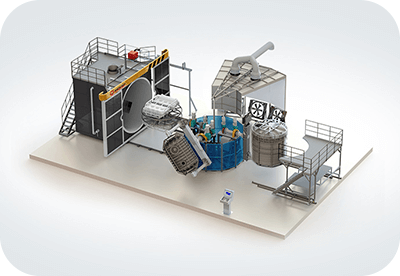


In our last installment, we explored the fundamental principles behind rotational molding — no high pressure, almost zero waste, just a simple and efficient process that has established itself firmly in the world of hollow plastic products. If the science we covered is the skeleton of rotomolding, then what we’re diving into today — its application areas — is the lifeblood that keeps it moving.
Many people still picture rotomolding as just “making big plastic tanks.” But the technology has long since burst out of that box. From massive storage vessels at chemical plants to children’s toys in your neighborhood, from high-end smart equipment to aerospace components, rotomolding is everywhere. Today, we’ll walk you through the full landscape of rotomolding applications and show you just how versatile this unsung technology really is.
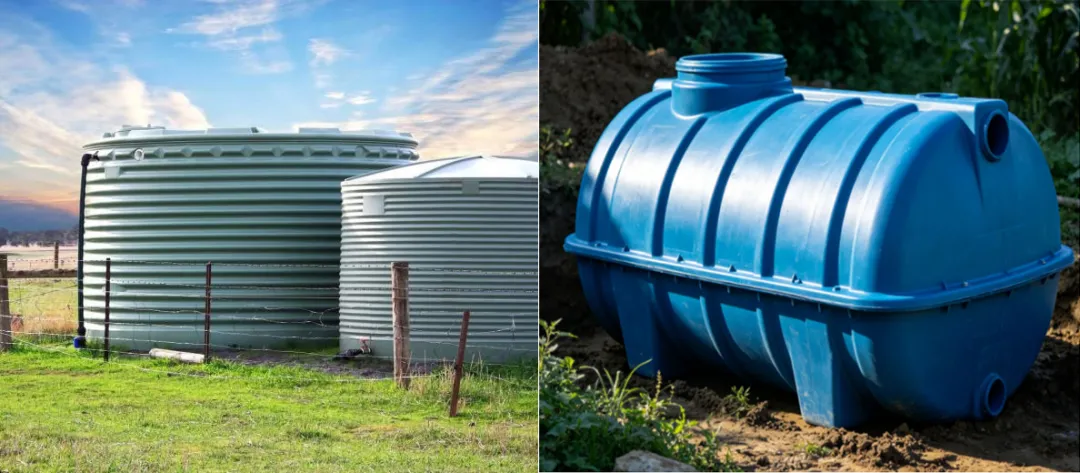
1. Chemical Storage & Transport: Rotomolding’s Home Turf
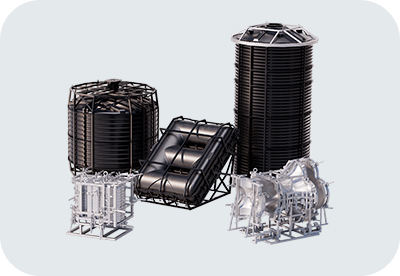
Chemical storage and transport is rotomolding’s core market, accounting for roughly 35% of all applications. Those giant plastic tanks you see at chemical plants and wastewater treatment facilities? Nine times out of ten, they’re made with rotomolding. From 200L drums to 50,000L massive storage tanks, they can all be rotationally molded in a single pass — with zero weld seams. When you’re storing corrosive liquids like acids, alkalis, or chemical agents, that seamless structure completely eliminates leak risks. These products resist acid and alkali corrosion, can sit outdoors for over a decade without significant aging, and can be fitted with level gauges, manholes, and other accessories as needed — practicality maximized.
Water treatment equipment also relies heavily on rotomolding: secondary supply water tanks, rural septic tanks, and water plant filtration vessels are all commonly rotomolded products. They can be made with double-wall hollow structures for excellent insulation, built-in reinforcing ribs to prevent deformation when filled with water, and food-grade materials to ensure water safety.
2. Transportation: The Art of Balancing Lightweight and Safety
Today’s automobiles and ships are all chasing “lightweighting” — saving fuel while boosting safety. Rotomolding fits the bill perfectly.
Automotive parts like diesel tanks, urea tanks, and body deflector shields, along with the traffic barriers you see on roads, are mostly rotomolded products. Seamless construction prevents fuel leaks, and they weigh 30%–50% less than metal equivalents. Fire truck water tanks and sanitation truck waste bins are also made with rotomolding, with single units reaching up to 3,000L — plenty of capacity and built to last.
In the marine and ocean engineering sector, rotomolded products are everywhere. Coastal buoys, navigational markers, kayaks, and surfboards are commonly made using rotomolding. Even subway and high-speed train luggage racks and seat backs use rotomolded components — lightweight with a smooth surface that’s ready for direct spray painting.

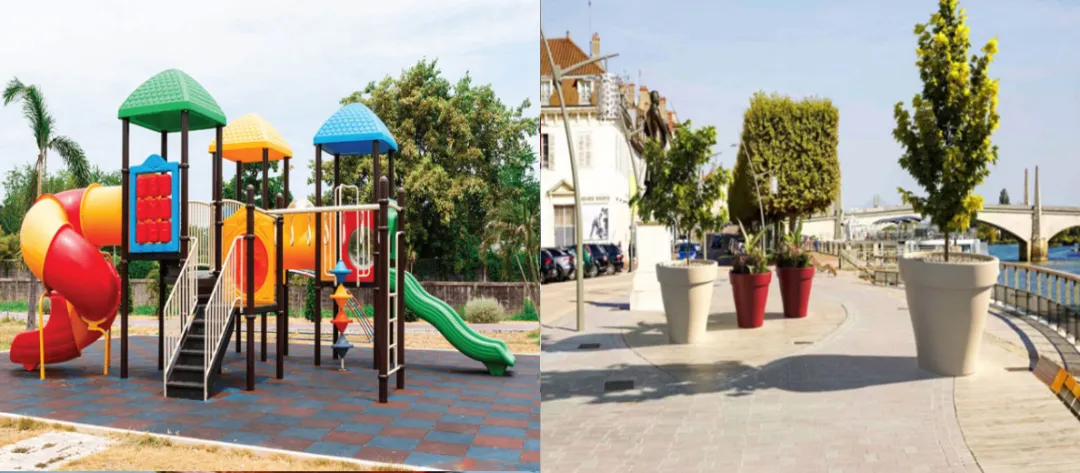
3. Recreation & Outdoor: Where Creativity Meets Safety
Rotomolding’s design freedom is what makes it thrive in recreation and outdoor applications. Without the constraints of high pressure, it can produce virtually any shape imaginable.
Neighborhood slides, mazes, climbing frames, and kindergarten playhouses — many of these are rotomolded products. The key advantage is safety: all corners are rounded with no sharp edges. Colors use built-in masterbatch that won’t fade even after ten years of sun exposure. Modular designs allow different themed playgrounds to be assembled, offering maximum flexibility.
Park benches, flower pots, trash bins, and urban landscape sculptures are all commonly made with rotomolding. No painting needed — just wipe clean when dirty. They resist scratches and graffiti, and can withstand temperatures from -20°C to 70°C outdoors without cracking or deforming. Truly maintenance-free.
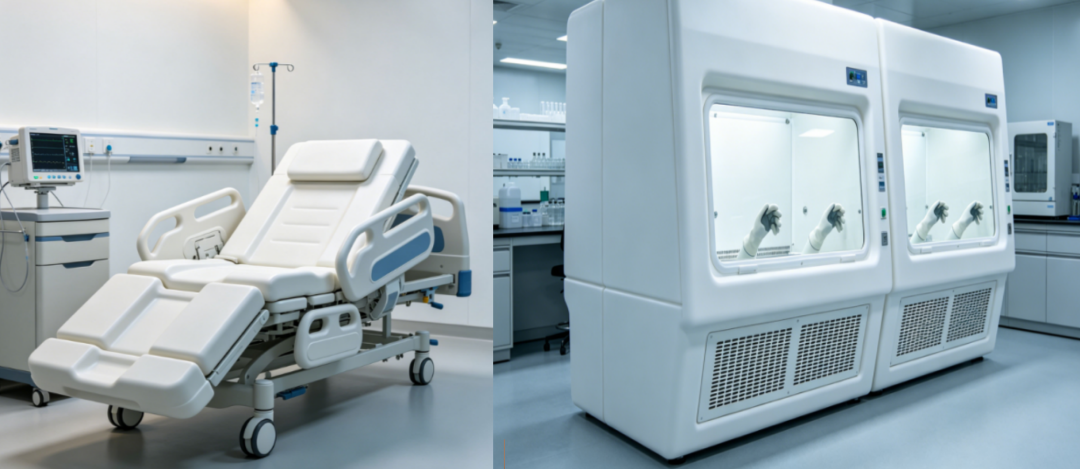
4. Medical & Healthcare: Meeting the Dual Demands of Safety and Precision
The medical field demands the highest standards, and rotomolding rises to the challenge — safe and sterile, yet precise and durable.
Housings for X-ray machines and CT scanners are largely rotomolded. Special materials can be added for radiation shielding without compromising equipment precision. Bedside cabinets and guardrails have smooth, seamless surfaces that are easy to clean, and silver-ion antibacterial agents can be incorporated to prevent bacterial growth.
Rehabilitation equipment such as parallel bars, training stairs, and wheelchair components are all made with rotomolding. These products are lightweight yet strong, with static load capacity exceeding 500kg — 40% lighter than metal equivalents. Elderly users and patients find them much easier to handle, and the surfaces include anti-slip treatment.
Laboratory biosafety cabinets and waste liquid collection tanks are resistant to organic solvents and offer excellent sealing to prevent leaks, ensuring lab safety.
5. Agriculture & Environmental Protection: Durability Meets Economy
Agriculture and environmental protection are fields where durability and cost-effectiveness matter most — and rotomolding’s advantages of material efficiency and low cost hit the sweet spot.
Pesticide tanks, feed troughs, irrigation water tanks, and filters found on farmland are all rotomolded products. They resist water pressure and aging, lasting for years even under sun and wind exposure. Anti-algae treatments can also be applied to prevent algae buildup in water tanks that could affect irrigation.
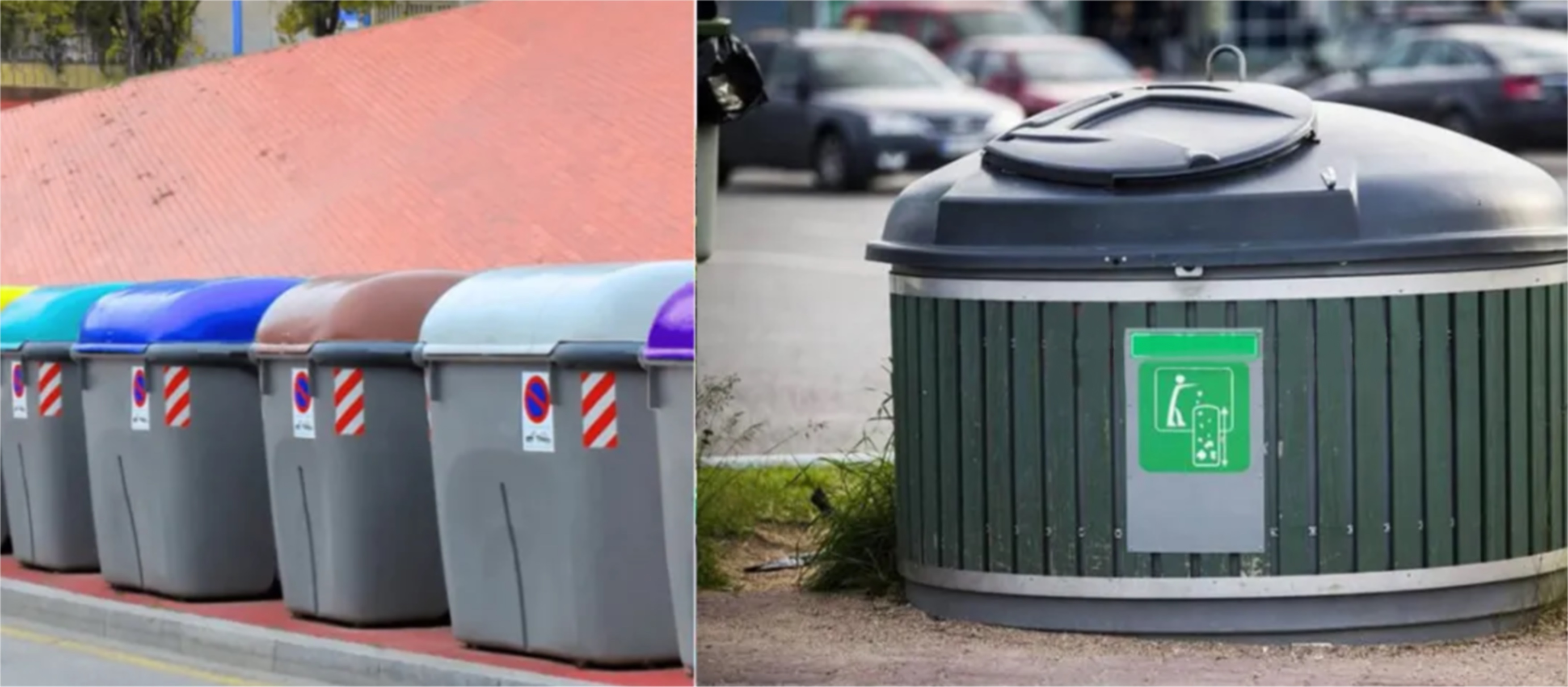
Neighborhood waste sorting bins and recycling stations are mostly rotomolded, with sorting labels molded directly into the surface — no extra stickers needed. Anti-theft designs are also available. Underground septic tanks and grease traps can withstand soil pressure and last for decades without damage, with inspection ports built in for easy maintenance.
6. New Energy & Smart Equipment: A Time-Tested Process Goes Modern
Surprisingly, this time-tested process has kept pace with the new energy and smart technology era, achieving cross-industry integration.
In the new energy sector, lithium battery housings and solar panel frame components made with rotomolding deliver both lightweight performance and protective functionality.
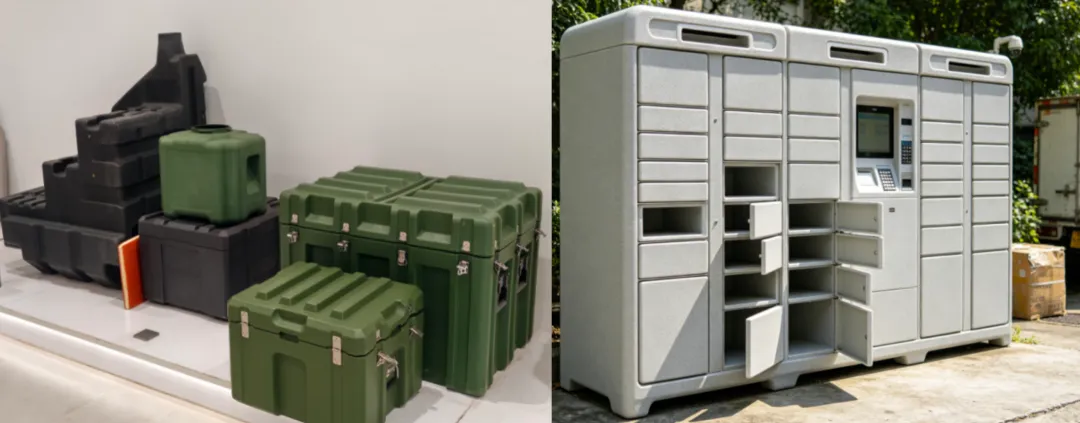
The smart parcel lockers, self-service terminals, and outdoor sensor housings you see everywhere in daily life are also largely rotomolded products. They provide waterproof and dustproof protection for stable outdoor operation, and can be customized into all sorts of complex shapes — compatibility maximized.Even in military and aerospace applications, rotomolding has earned its place. Blast-proof containers and camouflage equipment cases can be made bulletproof and lightweight, with custom camouflage patterns. Aerospace equipment protective covers have densities as low as 0.6g/cm³, offering lightweight durability and the ability to withstand short-term temperatures up to 150°C.
7. The Future of Rotomolding: The More It Crosses Boundaries, the More It Thrives
Today, rotomolding technology is growing in increasingly diverse directions. Traditional chemical applications are upgrading toward high-end and specialized uses. New energy and smart equipment sectors are claiming a growing share year by year. The technology can also be combined with 3D printing and composite materials to unlock even more innovation. As environmental standards rise, rotomolding’s advantages — virtually zero waste and full recyclability — become ever more compelling. And as demand for small-batch, customized production grows, rotomolding’s flexibility finds even greater scope.
Conclusion: The Value of Technology Lies in Solving Real Problems
The reason rotomolding has spread across so many industries isn’t because it’s flashy or high-tech — it’s because it solves real problems with precision. Chemical plants worry about leaks? It makes seamless tanks. Transportation needs lightweight parts? It delivers. Recreation demands safe, creative designs? It produces rounded-corner toys.
Rising Sun Rotomolding has been deeply rooted in this industry for over twenty years, witnessing rotomolding’s journey from traditional applications to cross-industry integration. We focus on refining our technology, carefully controlling every step of the process, all to transform the advantages of rotomolding into products that are more practical and more durable. If you have custom rotomolding product needs or want to learn more about application details, we invite you to reach out. Stay tuned for more rotomolding content in our upcoming installments!
Contact information:
www.risingsunroto.com
info@risingsunroto.com





 浙公网安备 33108102000897号