





If you work in rotomolding, you've experienced it: the raw material hasn't changed, the mold hasn't changed, yet problems keep cropping up in your products. Bubbles on the surface, voids inside, warpage and distortion after cooling, uneven wall thickness — scrap rates remain stubbornly high.
Seemingly simple hollow plastic products actually involve multiple process steps — heating, rotation, melting, and cooling. Compared to injection molding or blow molding, rotomolding doesn't use high-pressure extrusion. Process parameters are far more sensitive: even slight deviations in temperature, rotation speed, or cooling pace can lead to defects and quality issues.
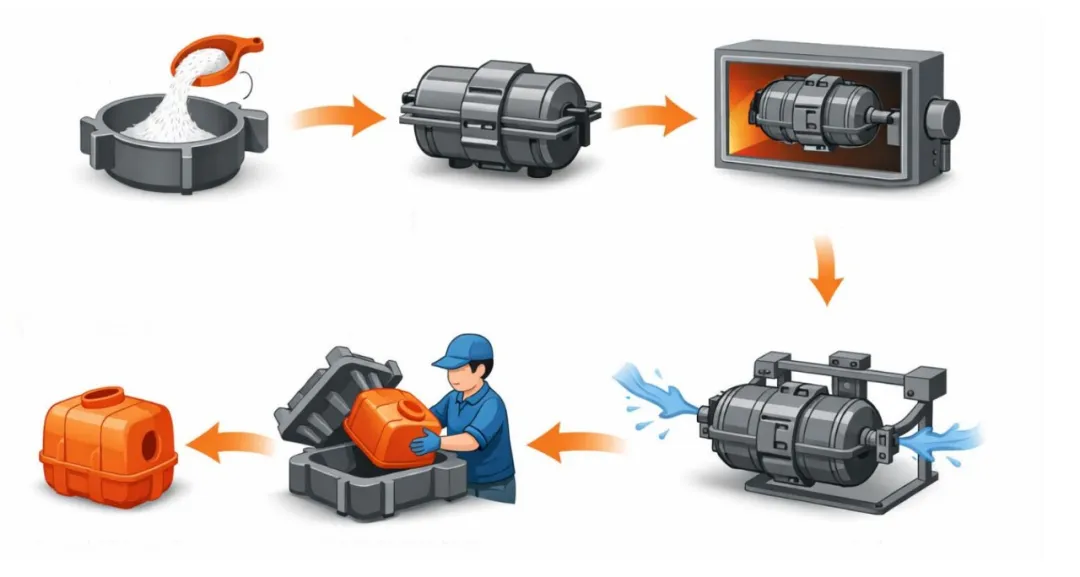
Among these, bubbles/voids, uneven wall thickness, and warpage — the three core defect categories — account for over 65% of all quality problems. Drawing on hands-on factory experience, this article breaks down the root causes of each defect and provides practical, actionable solutions.
1. Bubbles & Voids in Your Products? Here's What's Really Happening
Many people assume bubbles are simply caused by damp raw material. In reality, there are three distinct causes:
1.Air Entrapment in Powder: As the PE powder tumbles and heats inside the mold, air gets trapped in the gaps between powder particles. If this air cannot escape before the melt solidifies, it becomes sealed inside the plastic, forming uniformly distributed micro-bubbles with diameters under 0.5 mm.
2.Moisture & Additive Volatilization: When PE powder absorbs moisture, the water vaporizes at high temperature, creating large voids over 2 mm in diameter. The industry has a clear consensus: the safe moisture content for PE rotomolding powder must be kept below 0.02%. When moisture content exceeds 0.05%, the bubble defect rate triples, making consistent mass production extremely difficult.
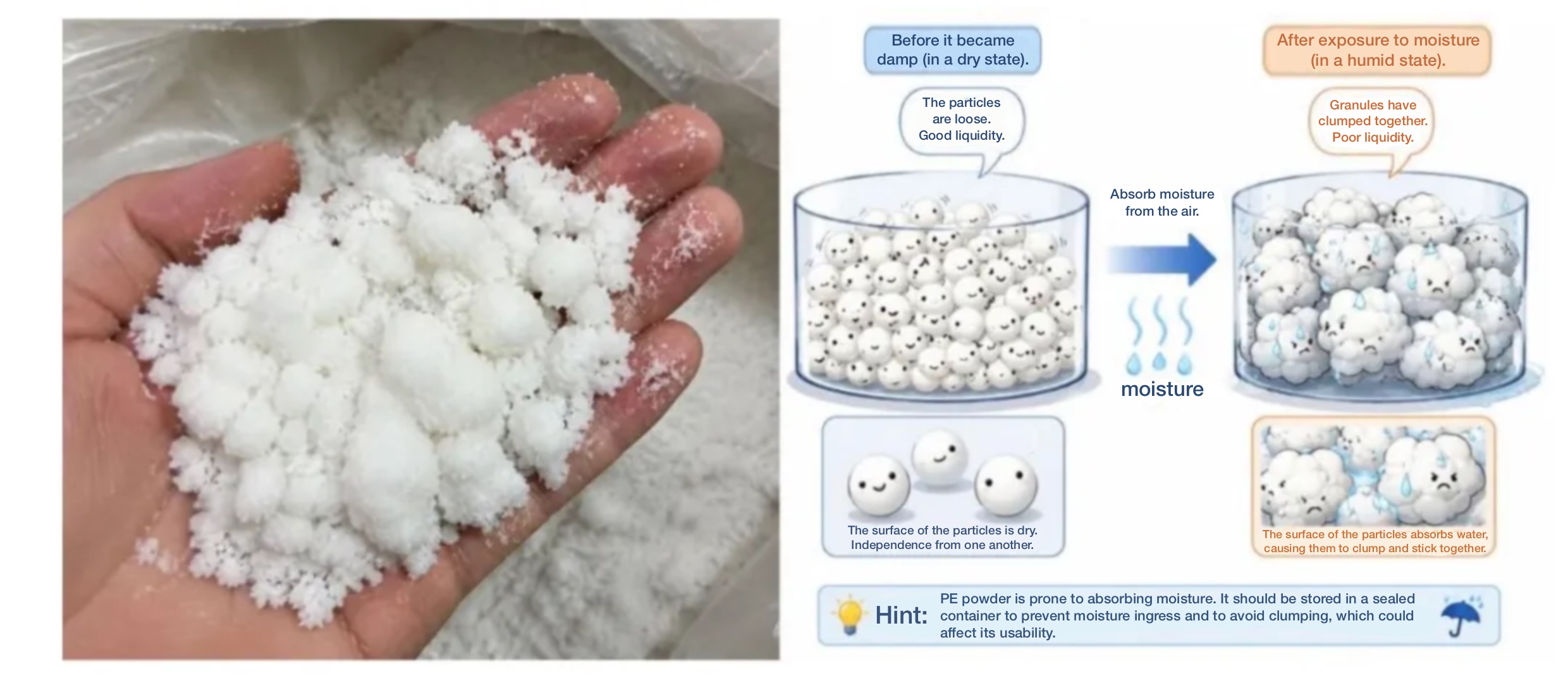
3.Thermal Degradation of Material: Excessively high heating temperatures break the molecular chains of polyethylene, releasing trace gases that form dense pinhole bubbles while also reducing the product's toughness.
Easy Fixes to Avoid These Problems:
1.Control the heating temperature: The suitable range for HDPE is 180–200°C, and for LLDPE 190–210°C. For thick-walled parts, reduce the temperature by 5–10°C to avoid overheating; for thin-walled parts, increase it slightly to ensure complete melting.
2.Keep heating time reasonable — follow the principle of "short hold after full melting."
3.Dry the powder at 70–80°C for 2–4 hours before production to strictly control moisture content.
4.Optimize the biaxial rotation speed ratio to ensure even material tumbling, which helps gas escape naturally.
5.For thick-walled products (wall thickness above 10 mm), combine vacuum degassing during the melting phase for significant bubble reduction.
2. Severe Wall Thickness Variation? Identify the Causes for Easy Optimization
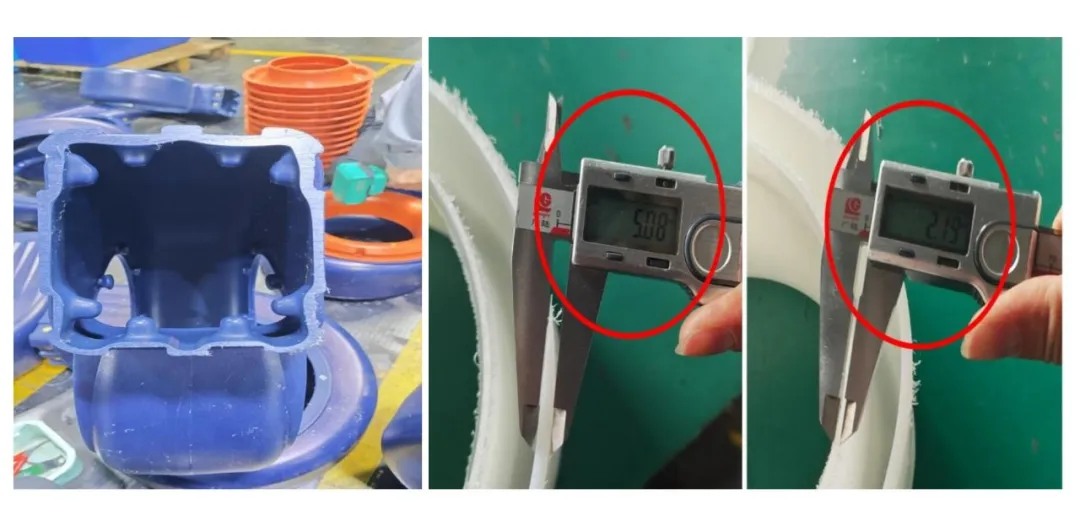
Uneven wall thickness is the most widespread issue in the rotomolding industry. The main causes fall into four categories:
1.Unreasonable rotation speed ratio — material flow becomes unbalanced, causing local buildup in some areas and shortages in others.
2.Uneven mold heating — corners, recesses, and protrusions have different thermal conductivity, resulting in inconsistent melt adhesion thickness.
3.Rigid product design — too many sharp corners and deep grooves make it difficult for powder to adhere evenly to the mold.
4.Insufficient melting hold time — poor melt fluidity prevents full coverage of the mold's inner surface.
How to Adjust and Improve:
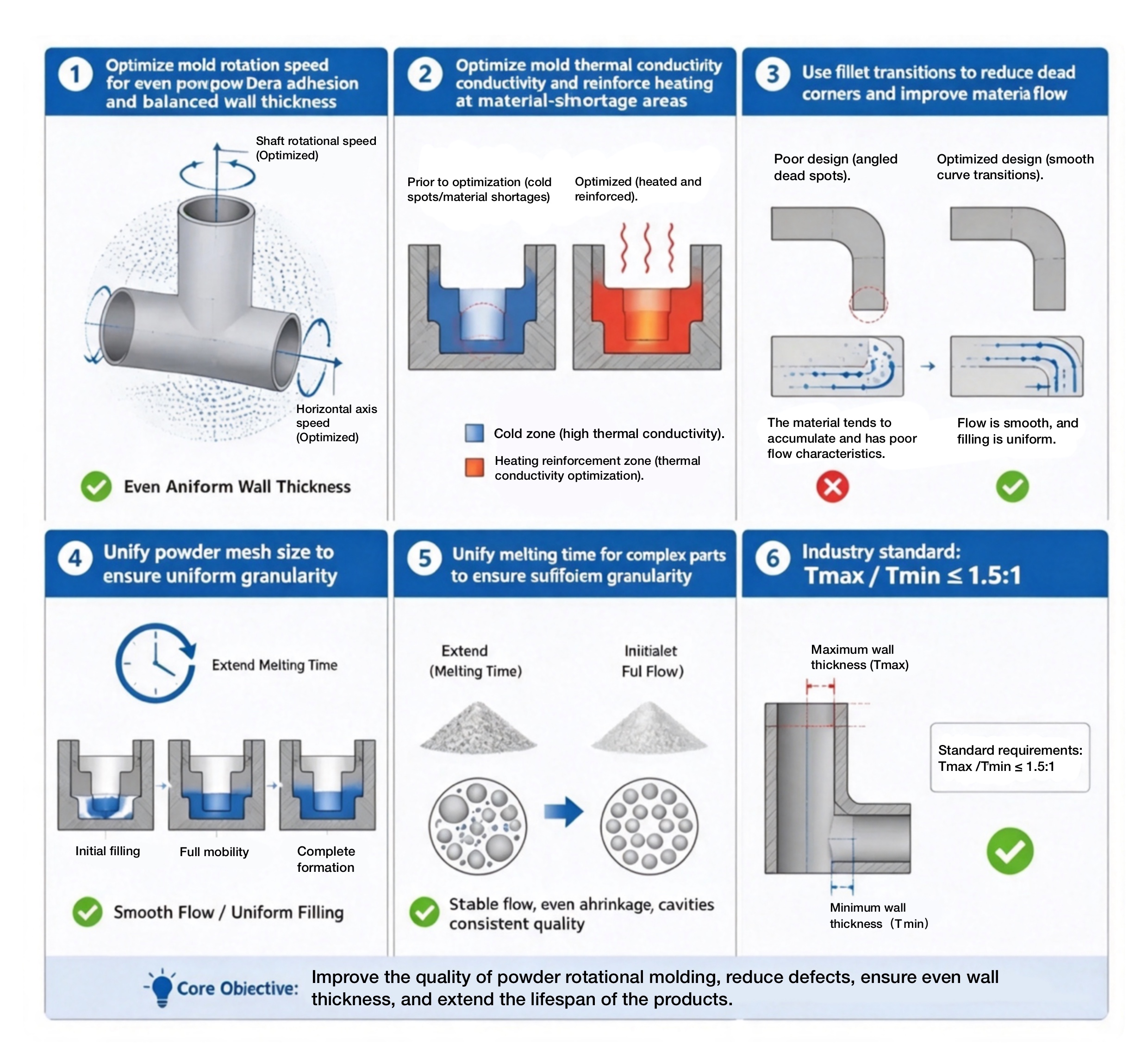
1.Optimize the horizontal and vertical axis rotation speeds based on the product geometry to ensure even powder adhesion, balancing wall thickness from the source.
2.Improve the mold's thermal conductivity structure and add targeted heating where material is insufficient.
3.Prioritize rounded transitions in product design, minimizing sharp corners to enhance material flow.
4.For complex products, extend the melting time to give the melt sufficient time to flow and form.
5.Standardize powder particle size to ensure uniform granule consistency.
6.Industry standard: the ratio of maximum wall thickness to minimum wall thickness should be kept within 1.5:1.
3. Warpage & Distortion? The Root Cause Is Unbalanced Shrinkage
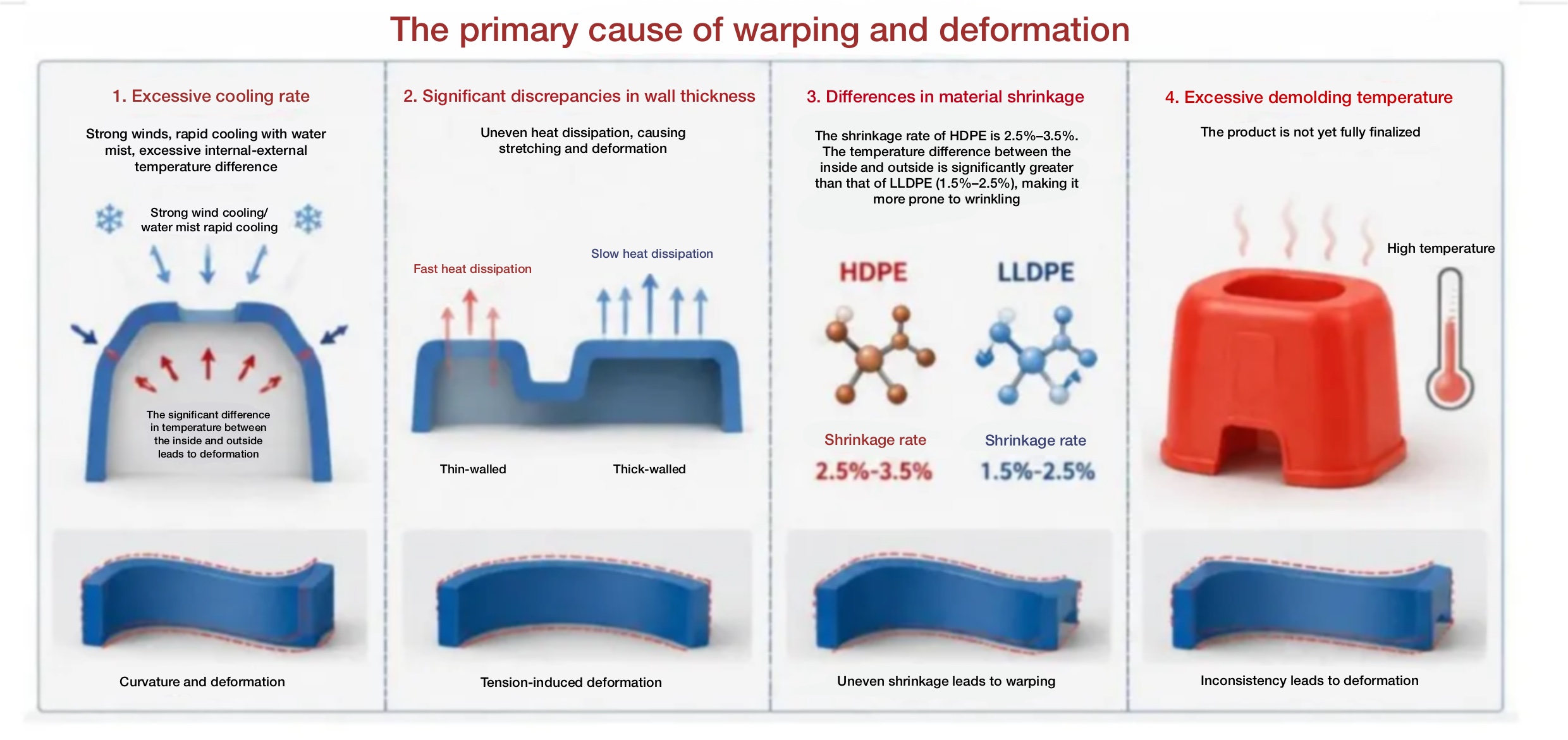
When rotomolded products warp, twist, or shift in dimension, it's not a mold problem — the core cause is uneven shrinkage.
During cooling, plastic naturally shrinks. When different areas of a product cool at different rates, the shrinkage varies, creating internal residual stress. Once the part is demolded, this stress is released, causing warpage, sink marks, and dimensional distortion.
Which Conditions Are Most Likely to Cause Warpage?
1.Cooling too fast — aggressive air cooling or water mist quenching creates excessive internal-to-external temperature differences.
2.Large wall thickness differences — uneven heat dissipation leads to distortion from differential pulling forces.
3.Material shrinkage differences: HDPE has a shrinkage rate of 2.5%–3.5%, which is higher than LLDPE's 1.5%–2.5%, making it more prone to warpage.
4.Demolding at too high a temperature — the product has not fully set.
How to Solve Warpage:
1.Adopt staged gradient cooling: slow cooling first for setting (cooling rate 5–8°C/min), then moderately accelerate once temperature drops to 100–120°C, and demold in the 80–90°C range.
2.Design molds and products with uniform wall thickness wherever possible, structurally minimizing warpage risk.
3.For products with tight appearance tolerances, prefer low-shrinkage LLDPE resin.
4.For large parts, use setting fixtures after demolding and allow full cooling before releasing.
Conclusion: Quality Confidence Comes from Mastering Every Detail of the Rotomolding Process
In any craft, excellence begins with understanding the fundamentals. Quality confidence comes from mastering every detail of the rotomolding process.
Bubbles, uneven wall thickness, and warpage may appear as three separate defects, but they all share the same underlying causes: uneven heat transfer, uneven shrinkage, and uneven material flow. By understanding the molding principles and relying on standardized process control — rather than blindly adjusting parameters by experience — defect rates for standard products can be consistently held below 1%, and even complex, irregular parts can be kept under 3%, far better than the industry average.
Doing rotomolding well requires more than understanding the molding principle — it means grasping the underlying logic of product design, mold structure, and machine setup.
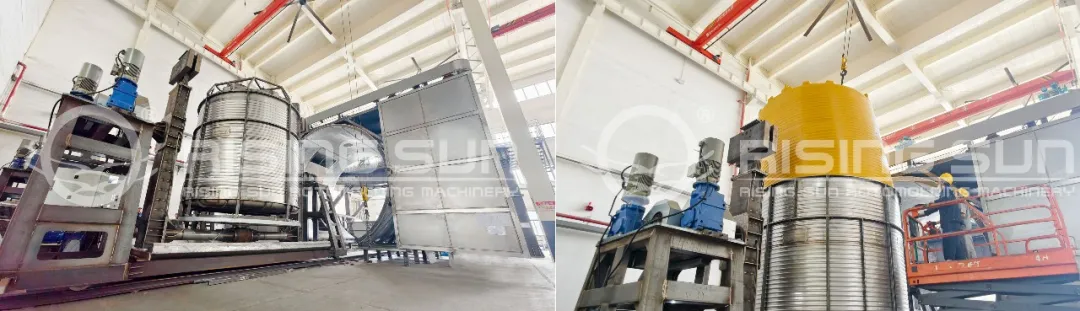
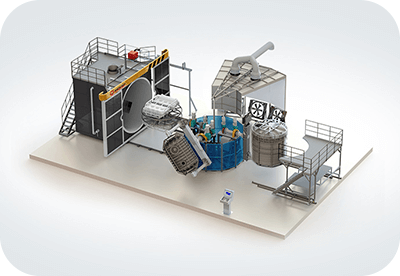
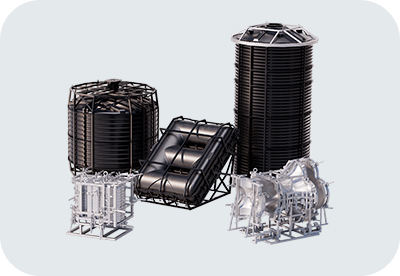
Rising Sun Rotomolding has been deeply engaged in the rotomolding industry for over two decades, building a complete supply chain spanning rotomolding equipment, mold development, and custom product manufacturing. We can undertake all types of rotomolding equipment, molds, and custom product orders, as well as provide technical support including process tuning and defect resolution.
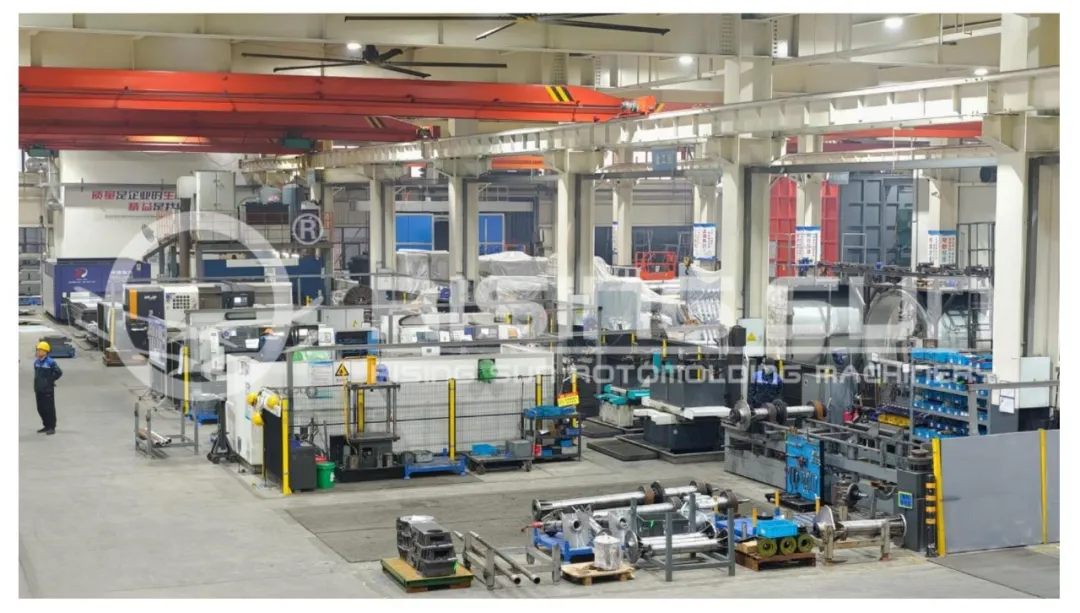
Backed by years of hands-on production experience, we maintain full-process control — from product design and mold optimization to process debugging — reducing molding defects at the source and helping customers lower scrap rates while maintaining consistent product quality.
Deeply rooted in rotomolding, dedicated to craftsmanship. We remain committed to sharing our accumulated rotomolding expertise and technical insights. Industry peers are welcome to exchange ideas, and those with equipment, mold, or custom product needs are welcome to reach out via message or leave a comment. On-site visits are also always welcome.
Email: info@risingsunroto.com
Website: www.risingsunroto.com




 浙公网安备 33108102000897号